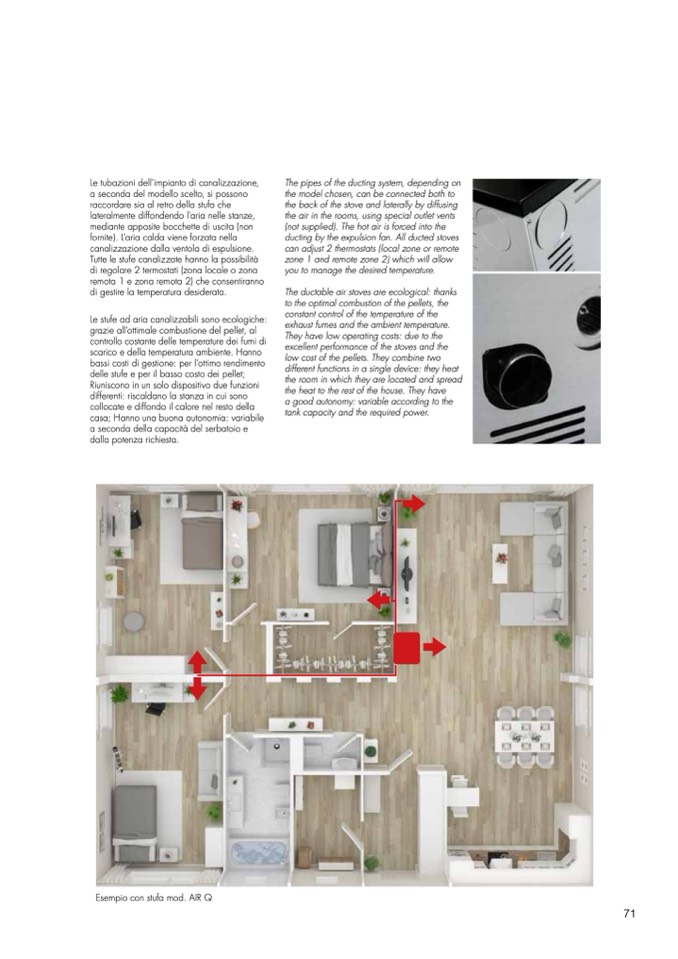
Le tubazioni dell’impianto di canalizzazione,
a seconda del modello scelto, si possono
raccordare sia al retro della stufa che
lateralmente diffondendo l’aria nelle stanze,
mediante apposite bocchette di uscita (non
fornite). L’aria calda viene forzata nella
canalizzazione dalla ventola di espulsione.
Tutte le stufe canalizzate hanno la possibilità
di regolare 2 termostati (zona locale o zona
remota 1 e zona remota 2) che consentiranno
di gestire la temperatura desiderata.
Le stufe ad aria canalizzabili sono ecologiche:
grazie all’ottimale combustione del pellet, al
controllo costante delle temperature dei fumi di
scarico e della temperatura ambiente. Hanno
bassi costi di gestione: per l’ottimo rendimento
delle stufe e per il basso costo dei pellet;
Riuniscono in un solo dispositivo due funzioni
differenti: riscaldano la stanza in cui sono
collocate e diffondo il calore nel resto della
casa; Hanno una buona autonomia: variabile
a seconda della capacità del serbatoio e
dalla potenza richiesta.
The pipes of the ducting system, depending on
the model chosen, can be connected both to
the back of the stove and laterally by diffusing
the air in the rooms, using special outlet vents
(not supplied). The hot air is forced into the
ducting by the expulsion fan. All ducted stoves
can adjust 2 thermostats (local zone or remote
zone 1 and remote zone 2) which will allow
you to manage the desired temperature.
The ductable air stoves are ecological: thanks
to the optimal combustion of the pellets, the
constant control of the temperature of the
exhaust fumes and the ambient temperature.
They have low operating costs: due to the
excellent performance of the stoves and the
low cost of the pellets. They combine two
different functions in a single device: they heat
the room in which they are located and spread
the heat to the rest of the house. They have
a good autonomy: variable according to the
tank capacity and the required power.
Esempio con stufa mod. AIR Q
71

