Advantages of Ventilated Facades
Vantaggi delle facciate ventilate
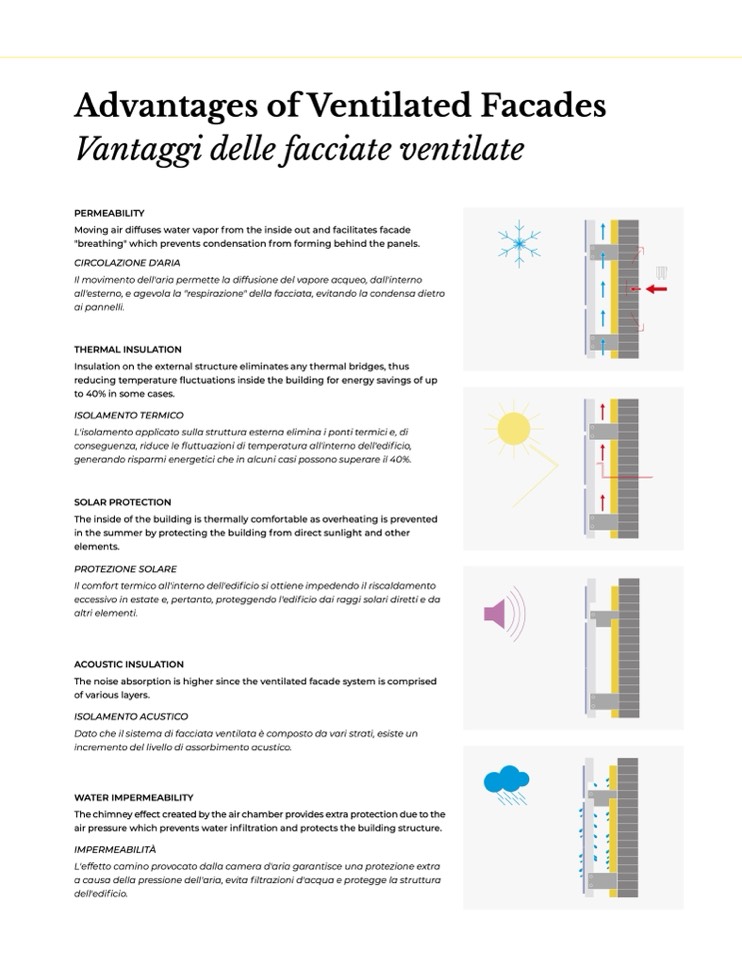
PERMEABILITY
Moving air diffuses water vapor from the inside out and facilitates facade
"breathing" which prevents condensation from forming behind the panels.
CIRCOLAZIONE D'ARIA
Il movimento dell'aria permette la diffusione del vapore acqueo, dall'interno
all'esterno, e agevola la "respirazione" della facciata, evitando la condensa dietro
ai pannelli.
THERMAL INSULATION
Insulation on the external structure eliminates any thermal bridges, thus
reducing temperature fluctuations inside the building for energy savings of up
to 40% in some cases.
ISOLAMENTO TERMICO
L'isolamento applicato sulla struttura esterna elimina i ponti termici e, di
conseguenza, riduce le fluttuazioni di temperatura all'interno dell'edificio,
generando risparmi energetici che in alcuni casi possono superare il 40%.
SOLAR PROTECTION
The inside of the building is thermally comfortable as overheating is prevented
in the summer by protecting the building from direct sunlight and other
elements.
PROTEZIONE SOLARE
Il comfort termico all'interno dell'edificio si ottiene impedendo il riscaldamento
eccessivo in estate e, pertanto, proteggendo l'edificio dai raggi solari diretti e da
altri elementi.
ACOUSTIC INSULATION
The noise absorption is higher since the ventilated facade system is comprised
of various layers.
ISOLAMENTO ACUSTICO
Dato che il sistema di facciata ventilata è composto da vari strati, esiste un
incremento del livello di assorbimento acustico.
WATER IMPERMEABILITY
The chimney effect created by the air chamber provides extra protection due to the
air pressure which prevents water infiltration and protects the building structure.
IMPERMEABILITÀ
L'effetto camino provocato dalla camera d'aria garantisce una protezione extra
a causa della pressione dell'aria, evita filtrazioni d'acqua e protegge la struttura
dell'edificio.

