TELAI
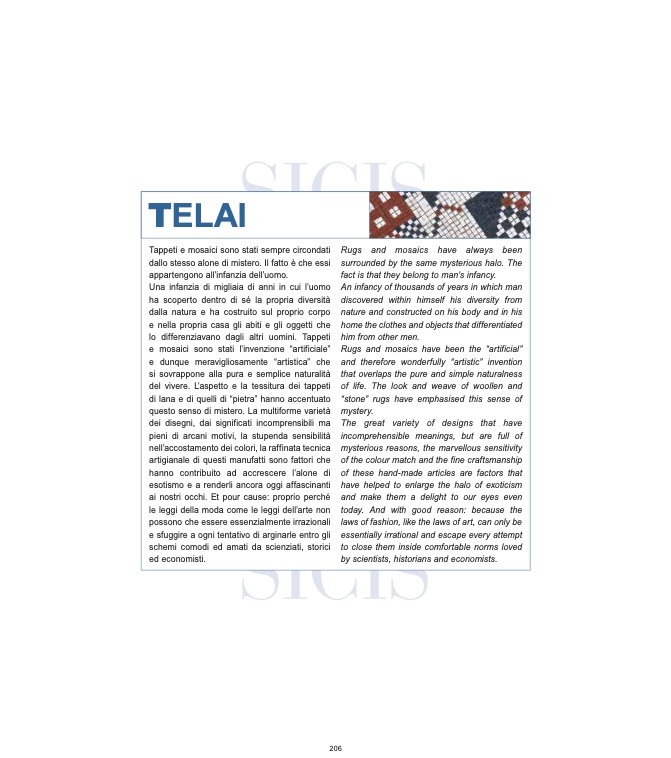
Tappeti e mosaici sono stati sempre circondati
dallo stesso alone di mistero. Il fatto è che essi
appartengono all’infanzia dell’uomo.
Una infanzia di migliaia di anni in cui l’uomo
ha scoperto dentro di sé la propria diversità
dalla natura e ha costruito sul proprio corpo
e nella propria casa gli abiti e gli oggetti che
lo differenziavano dagli altri uomini. Tappeti
e mosaici sono stati l’invenzione “artificiale”
e dunque meravigliosamente “artistica” che
si sovrappone alla pura e semplice naturalità
del vivere. L’aspetto e la tessitura dei tappeti
di lana e di quelli di “pietra” hanno accentuato
questo senso di mistero. La multiforme varietà
dei disegni, dai significati incomprensibili ma
pieni di arcani motivi, la stupenda sensibilità
nell’accostamento dei colori, la raffinata tecnica
artigianale di questi manufatti sono fattori che
hanno contribuito ad accrescere l’alone di
esotismo e a renderli ancora oggi affascinanti
ai nostri occhi. Et pour cause: proprio perché
le leggi della moda come le leggi dell’arte non
possono che essere essenzialmente irrazionali
e sfuggire a ogni tentativo di arginarle entro gli
schemi comodi ed amati da scienziati, storici
ed economisti.
Rugs and mosaics have always been
surrounded by the same mysterious halo. The
fact is that they belong to man’s infancy.
An infancy of thousands of years in which man
discovered within himself his diversity from
nature and constructed on his body and in his
home the clothes and objects that differentiated
him from other men.
Rugs and mosaics have been the “artificial”
and therefore wonderfully “artistic” invention
that overlaps the pure and simple naturalness
of life. The look and weave of woollen and
“stone” rugs have emphasised this sense of
mystery.
The great variety of designs that have
incomprehensible meanings, but are full of
mysterious reasons, the marvellous sensitivity
of the colour match and the fine craftsmanship
of these hand-made articles are factors that
have helped to enlarge the halo of exoticism
and make them a delight to our eyes even
today. And with good reason: because the
laws of fashion, like the laws of art, can only be
essentially irrational and escape every attempt
to close them inside comfortable norms loved
by scientists, historians and economists.
206

