NOVECENTO
Tutto il ’900 ha visto un continuo braccio di ferro
tra due estetiche: il modernismo, che puntava
sulla novità e la sua opposizione alla tradizione
e al passato, e il kitsch, fondato invece sulla
imitazione, sulla banalizzazione e il cheap.
Oggi pare che in ogni aspetto della cultura dalla
moda, all’interior decoration, ai film, alla musica
ciò che solamente un anno fa era banale, stia
diventando il fondamento di una nuova estetica
fatta di ricchezza di sensazioni che, in un
perfetto capovolgimento fa del modernismo il
nuovo kitsch.
Siamo all’avanguardia di un sentimento estetico
positivo: un romanticismo barocco che si
definisce attraverso una briosa ed esagerata
appariscenza, lontano dal cattivo gusto a buon
mercato. In una società in cui “tutto diventa
ironico” - ha scritto di recente Adam Gropnik
sul “New Yorker” spicca soltanto ciò che è
eccentricamente sincero.
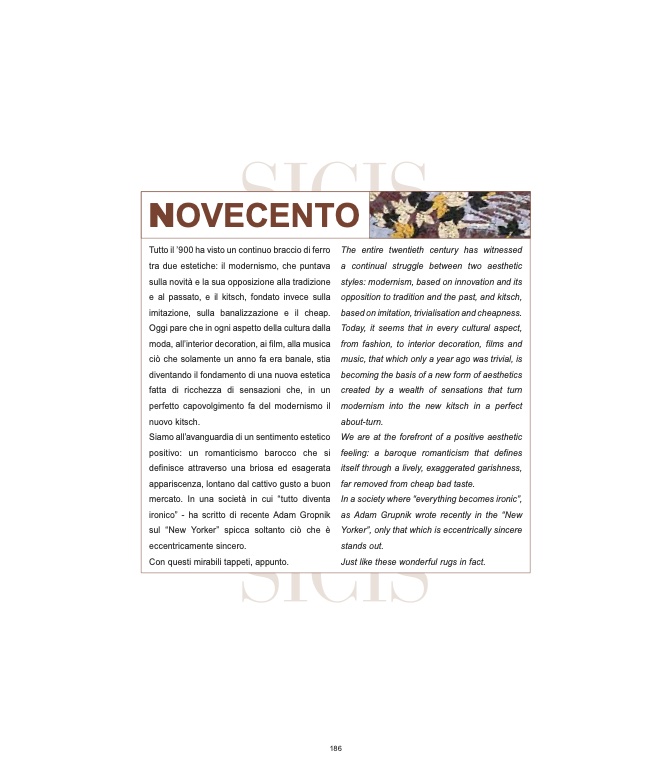
Con questi mirabili tappeti, appunto.
The entire twentieth century has witnessed
a continual struggle between two aesthetic
styles: modernism, based on innovation and its
opposition to tradition and the past, and kitsch,
based on imitation, trivialisation and cheapness.
Today, it seems that in every cultural aspect,
from fashion, to interior decoration, films and
music, that which only a year ago was trivial, is
becoming the basis of a new form of aesthetics
created by a wealth of sensations that turn
modernism into the new kitsch in a perfect
about-turn.
We are at the forefront of a positive aesthetic
feeling: a baroque romanticism that defines
itself through a lively, exaggerated garishness,
far removed from cheap bad taste.
In a society where “everything becomes ironic”,
as Adam Grupnik wrote recently in the “New
Yorker”, only that which is eccentrically sincere
stands out.
Just like these wonderful rugs in fact.
186

